
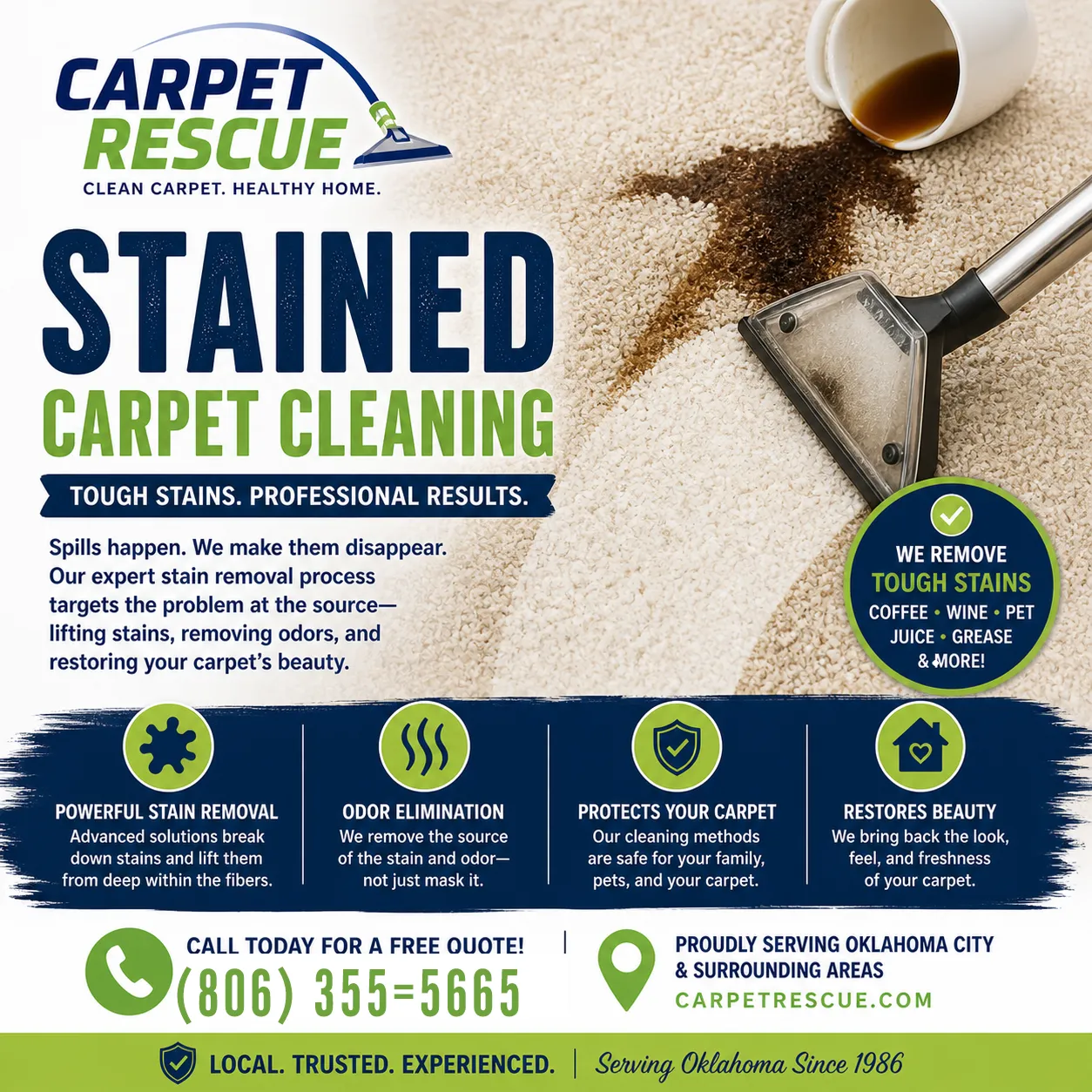
Stained Carpet Cleaning: How to Remove Spots and Restore Your Floors
Why Carpet Stains Happen
Carpet stains are part of everyday life. Spills, foot traffic, pets, and accidents all leave their mark over time. Because carpet fibers are designed to trap dirt, they also hold onto liquids and debris. This makes stains harder to remove if they are not treated quickly.
Some stains sit on the surface, while others sink deep into the fibers and even the padding below. That means not all stains can be handled the same way. Understanding the type of stain is the first step toward proper cleaning.
Common Types of Carpet Stains
Different stains require different approaches. Each type reacts differently with carpet fibers.
Food and Drink Stains
Coffee, wine, soda, and food spills are very common. These stains often contain dyes that bond quickly with carpet fibers.
Pet Stains
Pet accidents can be more complex. They leave behind both stains and odors. If not cleaned properly, they can soak into the padding and create long-term problems.
Oil and Grease Stains
Grease from food or oils from shoes can leave dark spots. These stains repel water, which makes them harder to remove with basic cleaning.
Dirt and Mud
Tracked-in dirt may seem simple, but it can grind into fibers over time. When mixed with moisture, it can create stubborn stains.
Acting Fast Makes a Difference
The most important rule in stained carpet cleaning is speed. The faster a stain is treated, the better the chances of removing it completely.
Start by blotting the stain with a clean cloth. Do not scrub. Scrubbing pushes the stain deeper into the carpet and can damage the fibers. Instead, apply gentle pressure to absorb as much liquid as possible.
For example, if a drink spills, blotting immediately can stop it from spreading. Waiting too long allows the stain to set, making it harder to remove later.
Safe Cleaning Methods for Stains
Using the right cleaning method helps protect the carpet while removing the stain.
Mild Cleaning Solutions
A simple mix of water and a mild cleaner can work well for many stains. It helps break down the material without harming the fibers.
Spot Treatments
Specialized spot cleaners are designed for specific stains like wine, ink, or grease. These products target the stain directly and make removal easier.
Enzyme Cleaners
For pet stains, enzyme cleaners are very effective. They break down organic material and remove both the stain and the odor.
Steam Cleaning
Deep stains often need professional steam cleaning. This method uses hot water extraction to remove dirt and residue from deep within the carpet.
What to Avoid When Cleaning Stains
Many people make mistakes when trying to clean carpet stains. These mistakes can make the problem worse.
- Scrubbing too hard
- Using too much water
- Applying harsh chemicals
- Ignoring the stain too long
For example, using strong chemicals can bleach or damage the carpet. Too much water can soak into the padding and lead to odors or mold. Gentle, controlled cleaning is always the better approach.
Professional Stained Carpet Cleaning
While small stains can be handled at home, larger or deeper stains often need professional care. Professional carpet cleaners use advanced equipment and proven techniques to remove tough stains safely.
Hot water extraction is one of the most effective methods. It pushes cleaning solution deep into the carpet and then pulls it back out along with the dirt. This process removes stains, allergens, and bacteria at the same time.
Professionals also know how to treat different types of stains. This prevents damage and improves the chances of full removal.
For example, a set-in stain from months ago may not respond to household cleaners. A professional treatment can often restore the carpet’s appearance and texture.
Restoring Carpet Appearance
After stains are removed, the carpet may still need grooming. Fibers can become flattened or uneven during cleaning.
Brushing or raking the carpet helps lift the fibers and restore their natural look. This step improves both appearance and texture. It also helps the carpet dry more evenly.
Because of this, the carpet looks refreshed and feels softer underfoot.
Preventing Future Stains
Prevention is just as important as cleaning. A few simple habits can reduce the risk of stains.
- Use entry mats to catch dirt
- Remove shoes indoors
- Clean spills right away
- Schedule regular professional cleaning
Applying a carpet protector can also help. These products create a barrier on the fibers, making it harder for stains to set. This makes future cleaning easier and more effective.
For example, a treated carpet can resist spills long enough for you to clean them before they become permanent stains.
How Often Should Carpets Be Cleaned
Regular cleaning helps prevent stains from building up over time. The right schedule depends on the household.
- Light use: every 12 months
- Moderate use: every 6 to 9 months
- Heavy use or pets: every 3 to 6 months
Staying consistent helps maintain the carpet’s appearance and extends its lifespan.
Why Proper Stain Removal Matters
Stained carpets affect more than just appearance. They can hold odors, bacteria, and allergens that impact indoor air quality. Over time, untreated stains can damage the carpet and lead to costly replacement.
Proper cleaning keeps carpets looking better and lasting longer. It also creates a cleaner, more comfortable living space.
That means a simple spill does not have to become a lasting problem. With the right care and cleaning methods, carpets can stay fresh, clean, and inviting for years.